
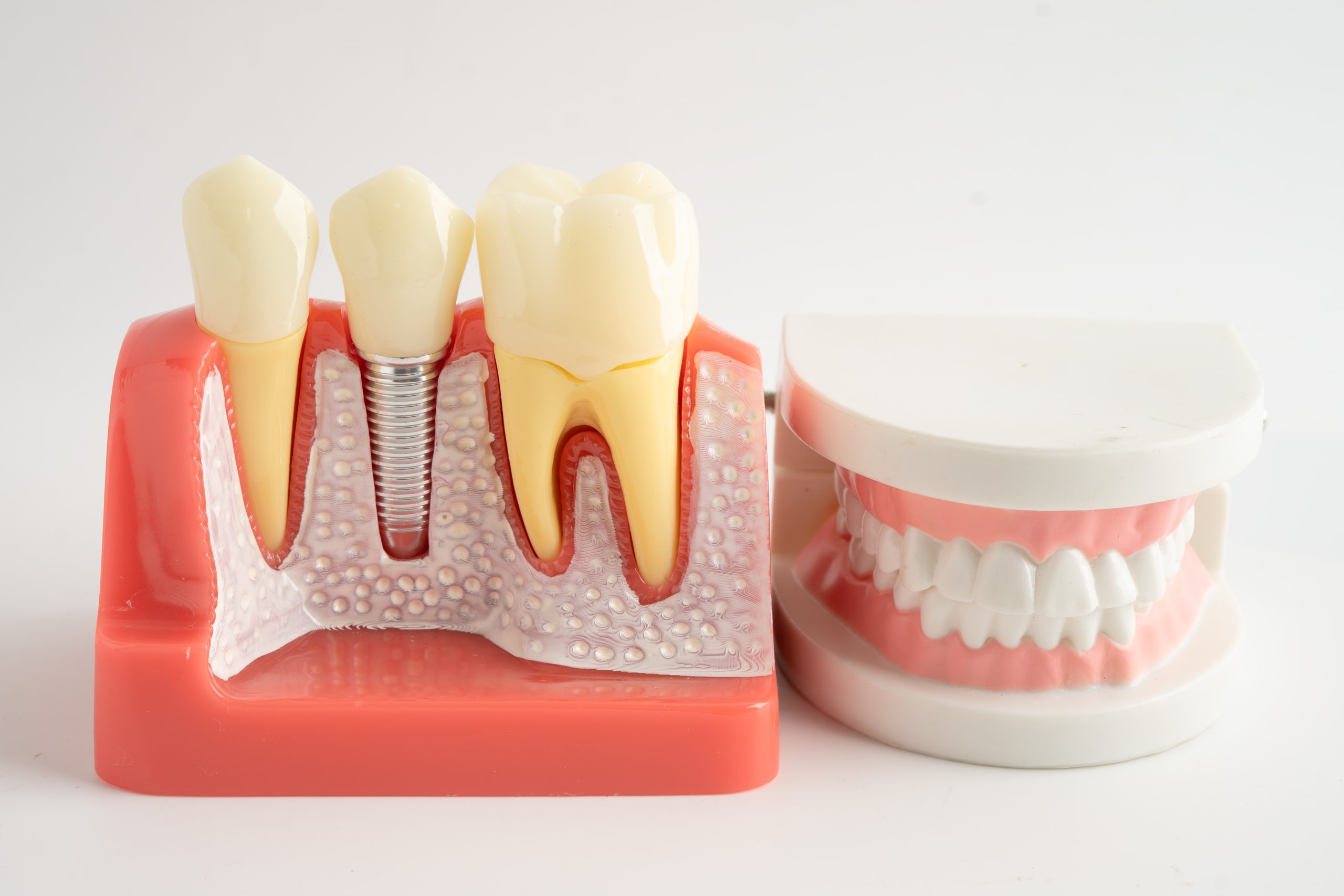
When choosing between dental implants and dentures, the right option depends on your jawbone health, daily habits, and how natural you want your new teeth to feel. Dental implants offer a permanent, fixed solution that mimics natural teeth and preserves jawbone health, while dentures provide a removable, non-invasive way to replace many teeth at once.
At Brilliant Family Dentistry in Denver, we understand that facing tooth loss, whether from injury, decay, or other health reasons, can be overwhelming. Dr. Farbod Fazel helps patients weigh both choices so they can smile, eat, and speak with confidence. This guide breaks down everything you need to know.
Both options restore missing teeth, but they do so in fundamentally different ways.
Dentures are removable prosthetic devices custom-made to replace missing teeth. They consist of artificial teeth, typically acrylic resin or porcelain, set into a pink, gum-colored acrylic base that fits over your natural gums. They rest on top of your gums, held in place by suction, the shape of your mouth, and sometimes a small amount of adhesive.
Full Dentures: Used when all teeth in an upper or lower arch are missing. The upper denture covers the palate, while the lower is shaped like a horseshoe to accommodate your tongue.
Partial Dentures: Used when some natural teeth remain. They fill gaps and anchor to remaining teeth with discreet clasps to prevent shifting.
Dentures have been a trusted solution for generations and remain effective for many patients today.
A dental implant is a permanent, surgical solution that replaces the entire tooth structure, from root to crown. It consists of three parts:
The Implant Post: A small, screw-like post made of biocompatible titanium, surgically placed into the jawbone to act as a new tooth root.
The Abutment: A connector piece attached to the post once the jawbone has healed around it.
The Restoration: The visible crown. At Brilliant Family Dentistry, we use advanced technology like digital design for our Same-Day Crowns, ensuring a precise, natural-looking fit.
Because the implant fuses directly with the jawbone, a process called osseointegration, it becomes a stable, durable part of your mouth that does not slip. Brilliant Family Dentistry offers dental implants as part of its range of restorative services.
For patients wanting more stability than traditional dentures, implant-supported dentures combine the strengths of both. A few strategically placed implants anchor a full or partial denture, which “snaps” onto the implants for far more security and chewing power than suction alone. It’s a popular choice for those replacing many teeth who want a sturdier feel.
Dentures: Function as a single unit resting on top of the gums. Stability depends on fit, suction, mouth shape, and sometimes adhesive.
Implants: Function as individual teeth anchored within the jawbone, topped with a crown, bridge, or denture. Chewing forces distribute like natural teeth, stimulating bone and providing unmatched stability.
Dentures: Non-surgical. It involves taking impressions to create a custom-fitted denture. If extractions are needed, a temporary “immediate” denture may be provided while gums heal, followed by the final denture. The process often takes a matter of weeks.
Implants: A surgical process in phases over several months, post placement, a healing period for osseointegration, then attachment of the abutment and crown. Dr. Farbod Fazel will evaluate your mouth and explain what to expect for your situation.
Dentures: Require daily removal for cleaning. Brush to remove food and plaque, and soak overnight in a special solution to prevent stains and retain shape. Gums and any remaining teeth must also be brushed.
Implants: Cared for just like natural teeth, daily brushing, flossing (special floss threaders or water flossers help), and regular check-ups at our Denver office. Many patients find this simpler than denture upkeep.
Dentures: Can take time to get used to. They may feel bulky, require practice to speak and eat, and can cause sore spots or shift as the fit loosens over time.
Implants: Look, feel, and function exactly like natural teeth. No palate coverage, no slipping, no learning curve, patients often forget they are there.
Implant-Supported Dentures: Fall in between, offering more stability than traditional dentures.
When a tooth is lost, the jawbone in that area no longer receives stimulation and begins to shrink, or resorb.
Dentures: Resting on the gums, they don’t stimulate the jawbone. Over time this can cause significant bone loss, a “sunken” facial appearance, and require relining or remaking as the jaw changes shape.
Implants: The titanium post acts as a tooth root, transmitting chewing forces to the jawbone. This stimulation maintains bone density, preserving the natural shape and strength of your jaw and face.
Dentures: Very hard, sticky, or chewy foods can be difficult to eat and may dislodge the appliance.
Implants: No dietary restrictions. Because they are as strong as natural teeth, you can enjoy all your favorite foods, from steak to apples, without worry.
No single option is right for everyone. Here’s a balanced look at each.
Durability and longevity — with proper care, implants can last a lifetime.
Preserves bone health — the only option that prevents jawbone loss and maintains facial structure.
Natural look and feel — indistinguishable from natural teeth.
Unmatched stability — no slipping, clicking, or adhesives.
Easy maintenance — care matches your normal brushing and flossing routine.
Replace many teeth at once.
Non-invasive — no surgery for traditional dentures.
Faster process — a quicker timeline from consultation to a complete smile.
Removable for easy cleaning.
Supports facial muscles to help prevent sagging for a fuller appearance.
Suitable for significant bone loss — a viable option for those who aren’t implant candidates.
Implants: Require a minor surgical step, a longer healing timeline, and sufficient healthy jawbone to support the post.
Dentures: Can feel uncomfortable, shift, or cause sore spots. They require nightly removal and special cleaning, don’t prevent bone loss, and need adjustments or replacement as the mouth changes shape.
The right choice often comes down to your oral health, goals, and willingness to care for your new teeth.
Ideal candidates have:
One or more missing teeth.
Adequate jawbone density to support the implant.
Good overall oral and general health.
Healthy gum tissues, free from periodontal disease.
If bone density is insufficient, a bone grafting procedure may build up the jaw and make you a candidate. Dr. Farbod Fazel can evaluate your situation with a thorough exam at our Denver practice.
Dentures are a flexible option for individuals who:
Are missing most or all of their teeth in an arch.
May not be candidates for surgery due to health reasons or insufficient bone.
Want a non-surgical, often faster way to replace many teeth at once.
Both options require excellent oral care to last. Implants need daily brushing and flossing to keep surrounding gums healthy. Dentures need regular cleaning and removal to prevent stains and irritation. Regular check-ups at Brilliant Family Dentistry keep whichever option you choose in great shape.
There’s no one-size-fits-all answer, so it helps to think through your personal priorities.
Ask yourself a few key questions:
How many teeth am I replacing, one, several, or a full arch?
Is preserving my jawbone a priority?
Do I want something permanent or removable?
How important is a natural feel when eating and speaking?
How much daily maintenance am I comfortable with?
Someone replacing a single tooth who wants the most natural feel may lean toward an implant, while someone replacing a full arch and seeking a quicker, non-surgical solution might prefer dentures.
The answer comes from a dentist who can examine your mouth in person. At Brilliant Family Dentistry, Dr. Farbod Fazel Fazel will review your oral health, listen to your goals, and walk you through your options.
Choosing between dental implants and dentures comes down to your jawbone health, how many teeth you’re replacing, your maintenance preferences, and how natural you want your replacement teeth to feel. Implants offer a permanent, bone-preserving solution that functions like natural teeth, while dentures provide a flexible, removable, non-surgical option that can replace many teeth at once. Implant-supported dentures blend the strengths of both.

About the Author
Dr. Farbod Fazel
Conveniently Located in Denver
July 1, 2026